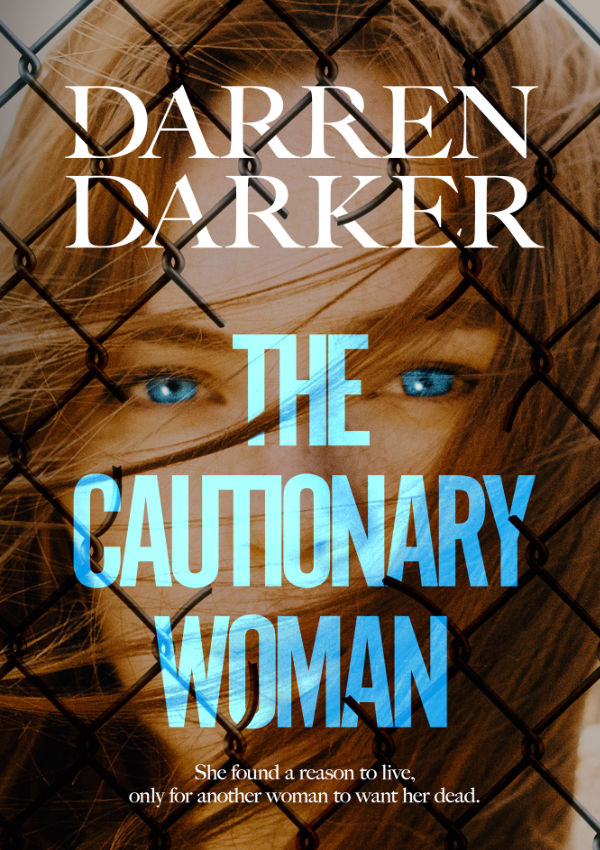
When people learn that you’re a writer, they often tell you funny and interesting anecdotes. Some go as far as suggesting someone (i.e. you!) should write a story about their life experiences. While obviously important to them, most would not be of sufficient interest or depth to turn into a novel. However, about six years ago, I was approached by a young woman who had a distressing personal story. She had been sexually abused as a child and this had led her to have addiction problems later in life. I was immediately struck by her tragic personal history. She graciously allowed me access to her diaries, which better helped me understand her past and what the consequences are for her now.
The more I read about her experiences, the more I realised that I simply was not a good enough writer at the time to do her or her story justice. The last thing I wanted to do was inadvertently trivialise her experiences or produce something that was so poorly written that it would elicit no interest from potential readers. That would be a real insult to what she had been through. Time moved on, and I developed as a writer, to a point that I felt where I could do the story some justice. While the vast majority of this story is fictionalised, at its heart is her truth. Aoife’s personality, as well as the young woman who inspired her, has a solid indestructible core. She is one of life’s survivors and this novel is built on her strength.
After finishing my initial series of John Morgan novels, and despite other potential projects, my mind inevitably turned to ‘Aoife’s’ story. I quickly developed a story arc around Aoife that involved her being imprisoned for a crime she did not commit – yet another torment piled on top of a troubled life. To have any chance of a future, she would have to go back and face her past. I have never made a secret of my own mental health issues. I have struggled with them on and off now for twenty-five years, borne from childhood trauma. Like everyone, my life has its ups and downs’ and I find myself returning to counselling every few years to help myself cope with the down periods. Mary, Aoife’s counsellor while in prison, is ultimately based on my own counsellor and the help that she provided to me. While I could never imagine how it feels to be sexually abused or raped, my own battles against the malevolent ‘black dog’ of depression, gave me experience of the mechanics and processes around counselling. I therefore have personal insight into how sessions are commenced, their process and what they ultimately hoped to achieve. I simply had to conceptualise having one in a prison environment.
When people learn that you’re a writer, they often tell you funny and interesting anecdotes. Some go as far as suggesting someone (i.e. you!) should write a story about their life experiences. While obviously important to them, most would not be of sufficient interest or depth to turn into a novel. However, about six years ago, I was approached by a young woman who had a distressing personal story. She had been sexually abused as a child and this had led her to have addiction problems later in life. I was immediately struck by her tragic personal history. She graciously allowed me access to her diaries, which better helped me understand her past and what the consequences are for her now.
The more I read about her experiences, the more I realised that I simply was not a good enough writer at the time to do her or her story justice. The last thing I wanted to do was inadvertently trivialise her experiences or produce something that was so poorly written that it would elicit no interest from potential readers. That would be a real insult to what she had been through. Time moved on, and I developed as a writer, to a point that I felt where I could do the story some justice. While the vast majority of this story is fictionalised, at its heart is her truth. Aoife’s personality, as well as the young woman who inspired her, has a solid indestructible core. She is one of life’s survivors and this novel is built on her strength.
After finishing my initial series of John Morgan novels, and despite other potential projects, my mind inevitably turned to ‘Aoife’s’ story. I quickly developed a story arc around Aoife that involved her being imprisoned for a crime she did not commit – yet another torment piled on top of a troubled life. To have any chance of a future, she would have to go back and face her past. I have never made a secret of my own mental health issues. I have struggled with them on and off now for twenty-five years, borne from childhood trauma. Like everyone, my life has its ups and downs’ and I find myself returning to counselling every few years to help myself cope with the down periods. Mary, Aoife’s counsellor while in prison, is ultimately based on my own counsellor and the help that she provided to me. While I could never imagine how it feels to be sexually abused or raped, my own battles against the malevolent ‘black dog’ of depression, gave me experience of the mechanics and processes around counselling. I therefore have personal insight into how sessions are commenced, their process and what they ultimately hoped to achieve. I simply had to conceptualise having one in a prison environment.
I was extremely lucky to arrange (read beg!) an invitation to visit Limerick Prison, which is a closed medium security prison for adult males and females. I met and had good discussions with several prisoners and guards. I deliberately took no notes as I wanted everyone to feel comfortable and open up, which they did. The novel was never going to be an exact representation of prison conditions, I was more interested in getting ‘a feel’ for the place and the daily routine. I got a tour of the cells, communal areas, laundry, check in room, the different types of visiting areas and I was searched prior to access. We talked about their daily routines, their visits and on several occasions what they hoped would happen after they were released. I made a conscious decision to not ask them what got them locked up for in the first place. Generally, I got the impression that most of those I spoke with were simply left behind by society. Looking back, I think the prisoners and guards saw me as a bit of a novelty and I was asked as many, if not more, questions than I myself asked of them. One thing that I found interesting was the difference between most male and female prisoners. Most female prisoners mixed freely, while the males – in Limerick Prison at least – had to be separated along gang lines to reduce violence. The males also required activities to keep them busy, while the women seemed happy enough just to be left alone.
I found it a challenge to write female characters, especially coming off the back of writing three John Morgan novels which were more male centric action focused thrillers. However, judging by the favourable reviews of The Cautionary Woman, I think I made a reasonably good stab at it.
One of the things I firmly regret is not including contact information for anyone affected by ‘Aoife’s’ story. This is a mistake I will not make in the follow up, which at the moment is called A Cautionary Life. It involves Aoife being moved to Dublin’s Dochas Women’s Prison before getting out on temporary release and her struggles re-engaging in an Irish society that she has no experience in since she was a child.
(c) Darren Darker
About The Cautionary Woman:
In search of a better life, Aoife Cassidy’s family fled the gloom of recession-hit Ireland to the bright lights of New York City. But as a teenager, she spirals out of control after suffering sexual abuse at the hands of her father; seeking solace in the during and drugs that numb the pain she constantly carries with her. After a series of catastrophic personal events, the law catches up with her, and Aoife lands in the most brutal mixed prison in NYC.
Returning to Ireland to serve out her sentence, Aoife works through her trauma with the help of a prison psychologist and learns that, despite everything, she could have a future with her son. But a dark shadow from her past creates an opportunity for bloody revenge.